Game-piece scorer / Six iterations
See how I design
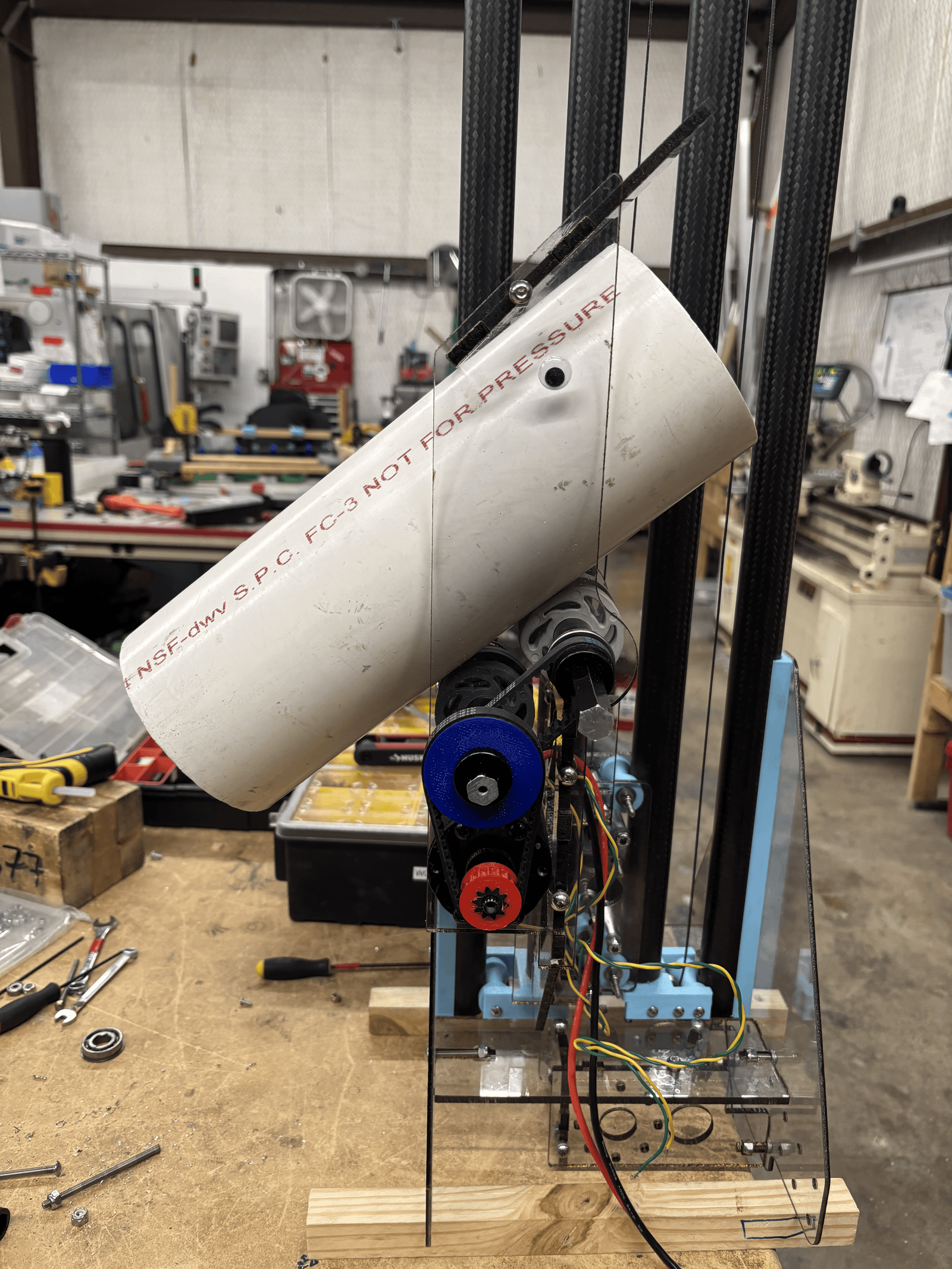
Selected stages from the proof of concept to the final game-piece scorer, developed through six iterations.
The problem
The game piece needed to transfer from the intake to the scorer before being raised by the elevator and scored. With only about a dozen handoffs per match, each failed transfer cost us a valuable scoring opportunity. I worked through six versions of the scoring mechanism to refine that complicated handoff. I designed the mechanism for easy attachment and removal so I could swap versions and test changes quickly.
Before the iterations
How the handoff works.
The intake feeds the game piece into the scorer while the elevator is lowered. The scorer needs to maintain contact through the transition, then hold the game piece as the elevator raises it to scoring height.
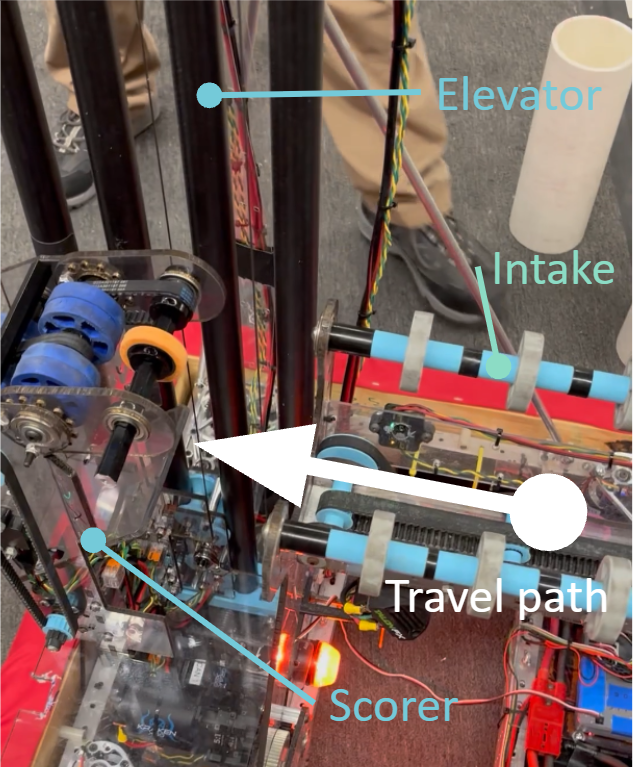
The finished handoff in action
Step 01 / Testing the idea
Proof of concept
Does the initial idea work in theory? Since the scorer had to move with the elevator, I wanted to keep it as simple as possible, using just one motor. I tested the basic geometry to see whether the concept was worth developing and to establish a starting point for the first real prototype.
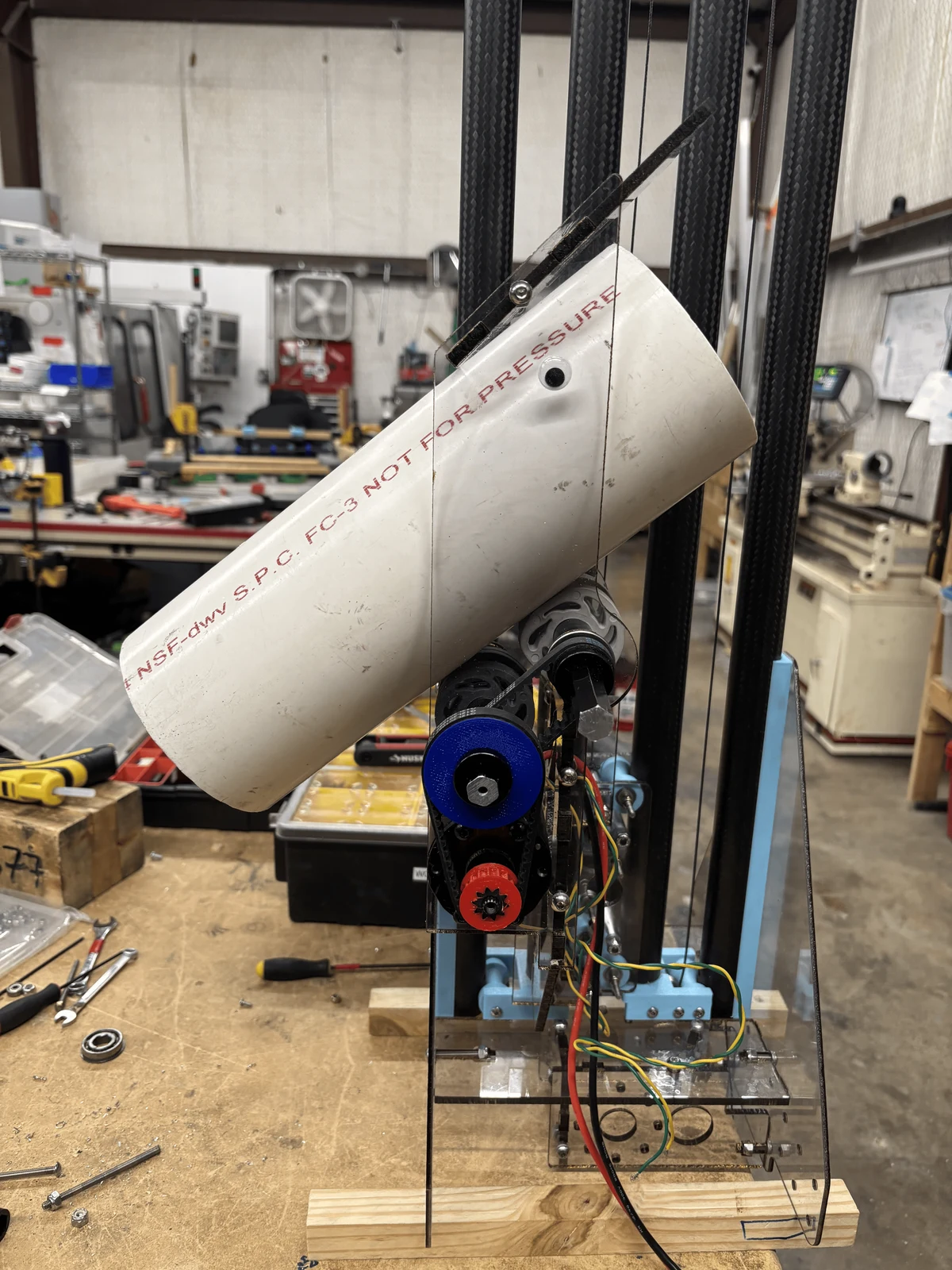
Version 2
Version 2
This version used two rollers on the bottom and worked as a proof of concept for scoring.
- The design
- Two bottom rollers supported the game piece for scoring.
- What testing revealed
- The handoff was still a problem. The game piece would ram into the top plate and stop instead of feeding into the scorer.
Additional Version 4 handoff test
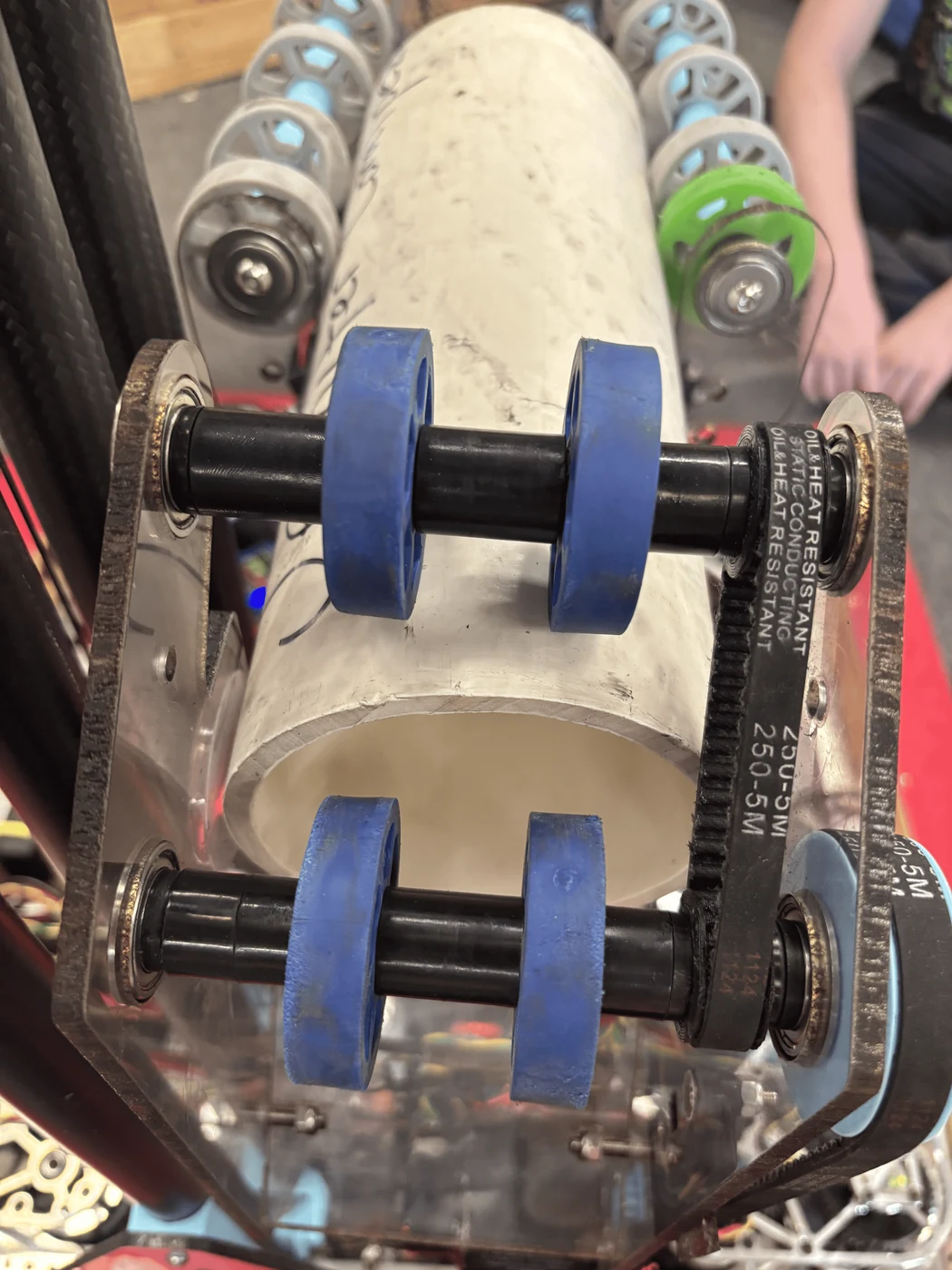
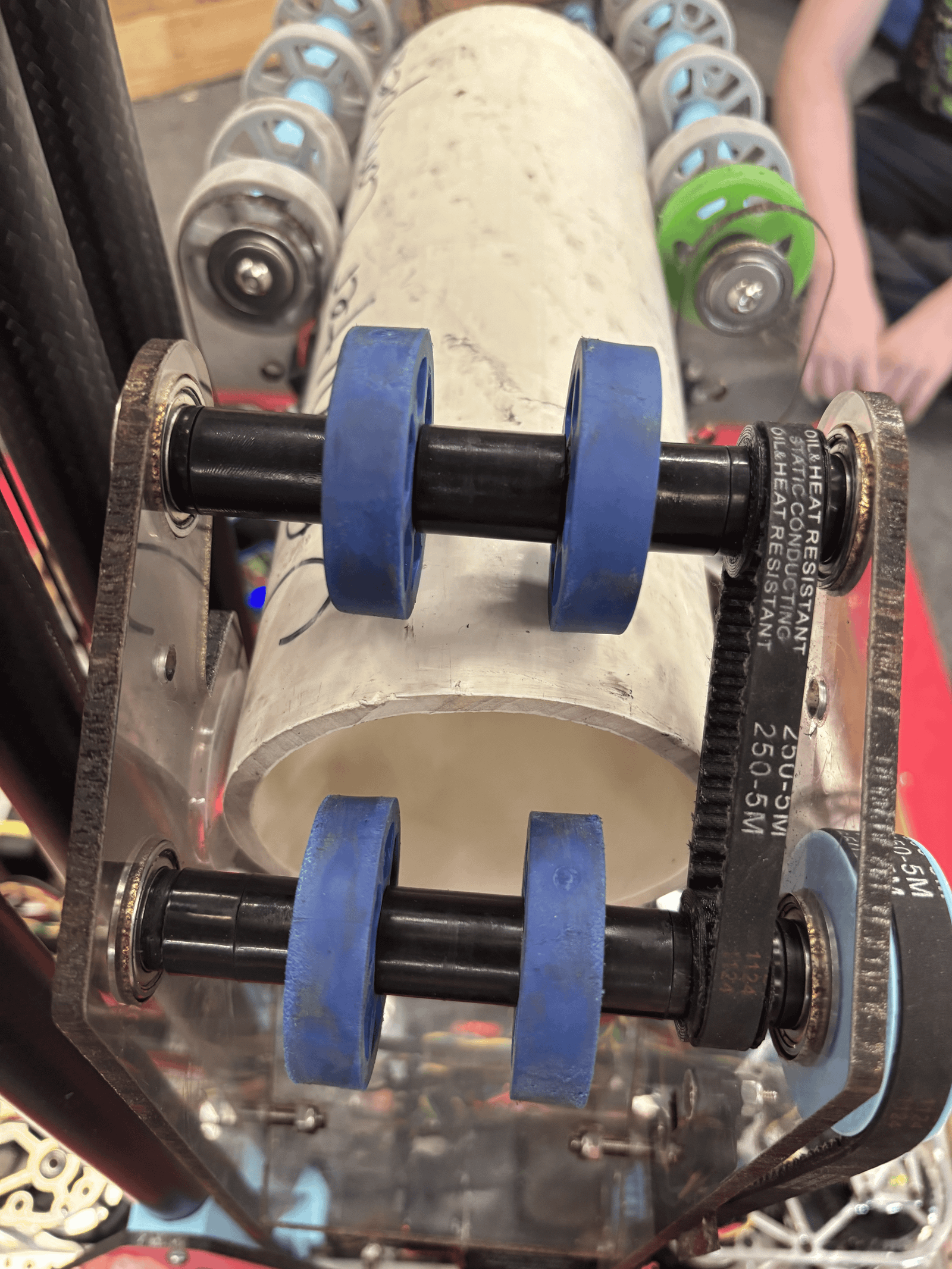
Roller spacing during the handoff Version 4
Maintaining contact through the handoff
- What I changed
- I moved the rollers so they could actively contact the game piece during the transition from the intake to the scorer.
- What testing revealed
- The rollers were too far apart. This left a dead zone where neither roller contacted the game piece, causing it to stop in the middle of the transition.
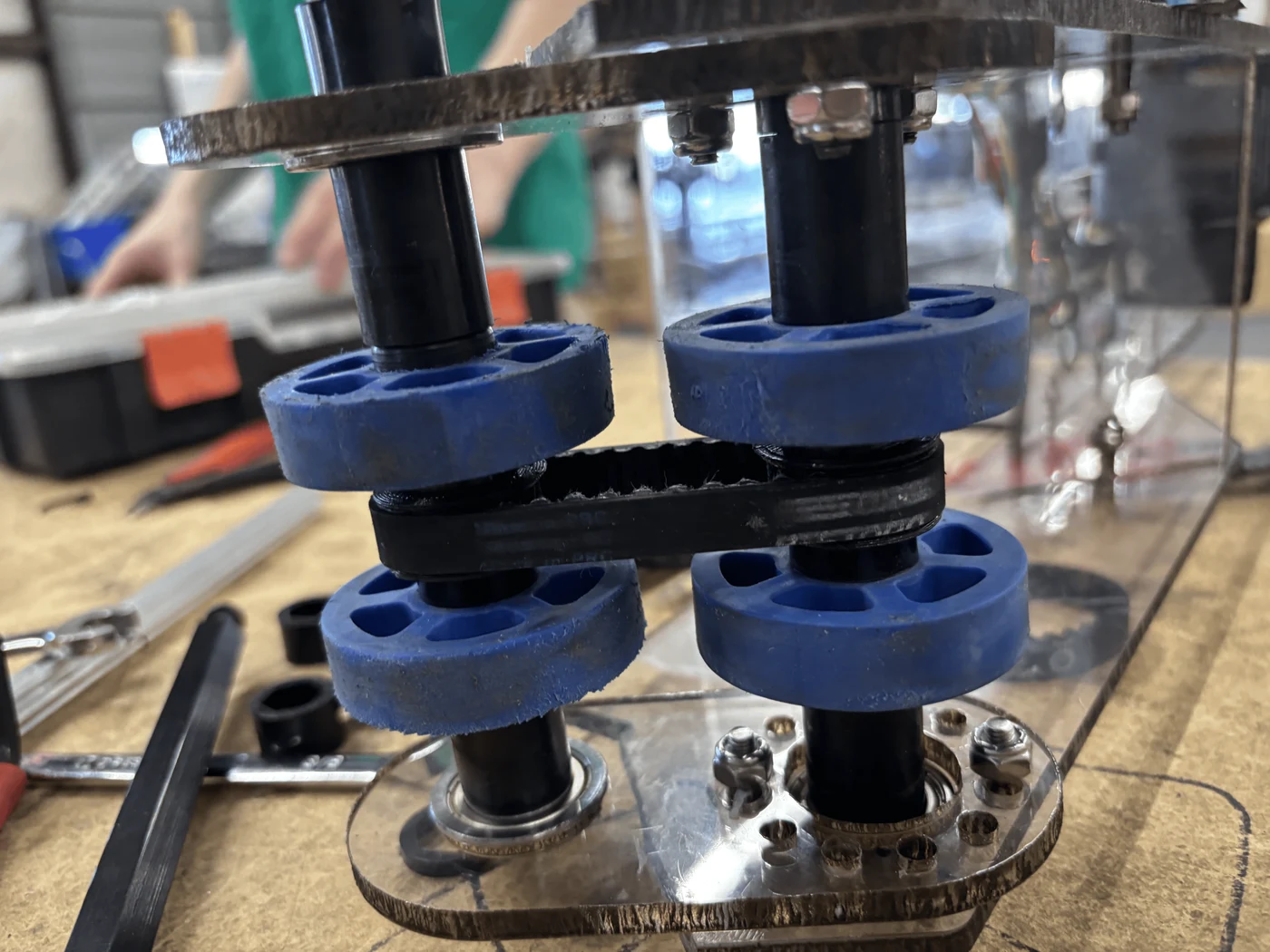
Version 5
Testing the roller height
- What I changed
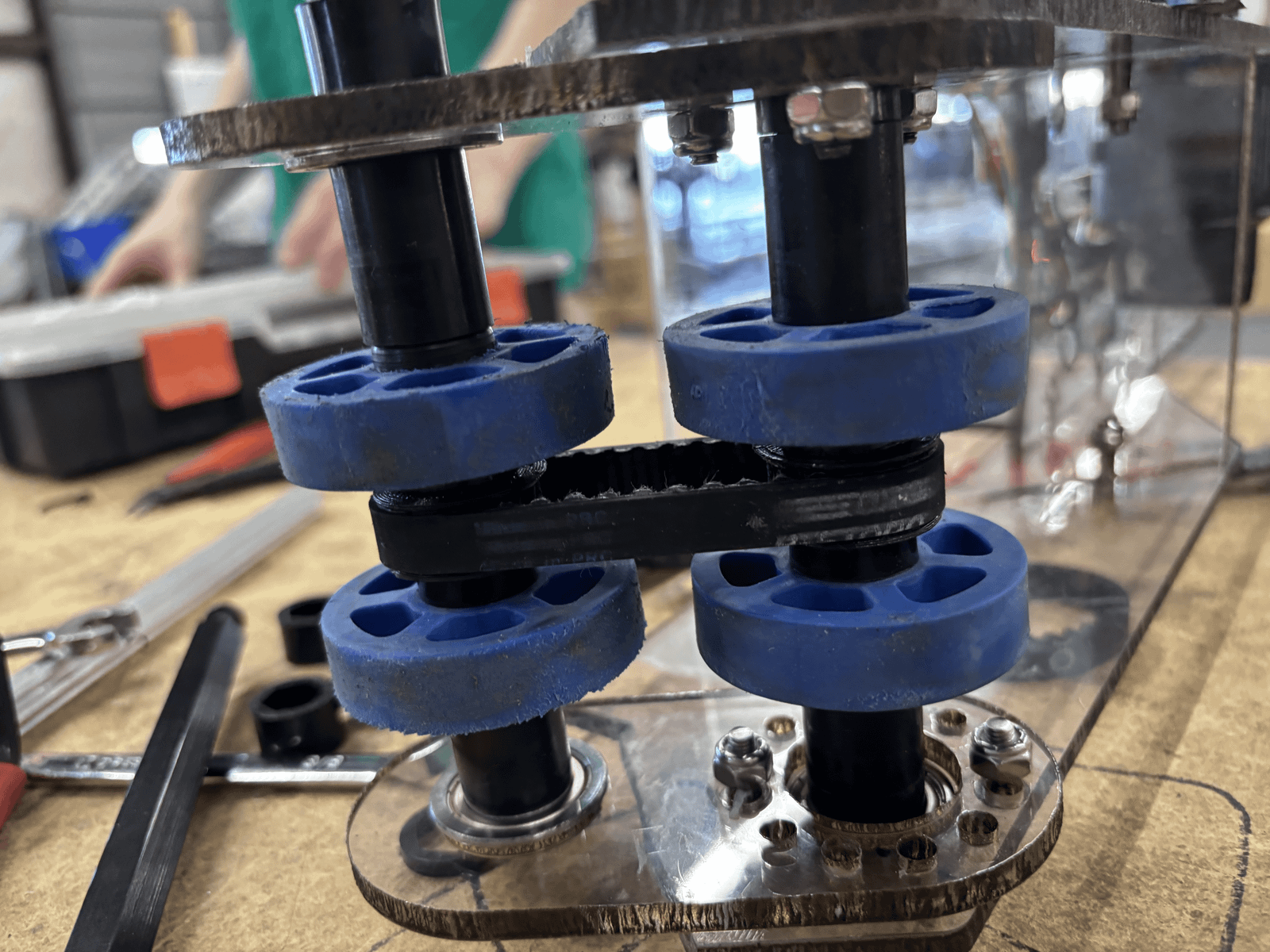
- I made a small plate that let me rotate the secondary roller to different heights so I could systematically test which position worked best during the handoff.
- What I learned
- Catching the top lip of the game piece to force it downward was crucial. But with two rollers, the angle needed for the handoff was not compatible with the scoring angle we found during the proof-of-concept stage. We needed a third roller.
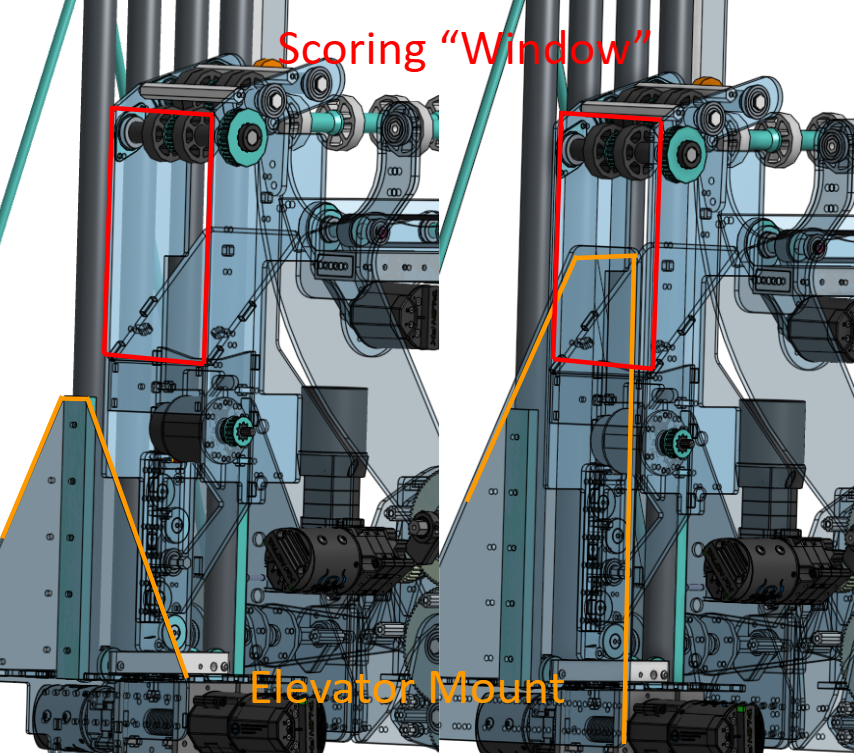
Finished design in action
Version 6 / Final version
Final design
With a third roller added, we reused the adjustable roller piece to find the best angle to tilt the game piece, then push it down into the scoring position.
- Problem
- The game piece carried momentum from the handoff and could fly straight through the scorer and out the other end. I tried using sensors to stop the rollers before it escaped, but that approach was unsuccessful.
- Solution
- I extended an existing elevator mount plate into the game piece’s path, creating a physical hard stop for it to run into instead of relying on the rollers stopping in time.