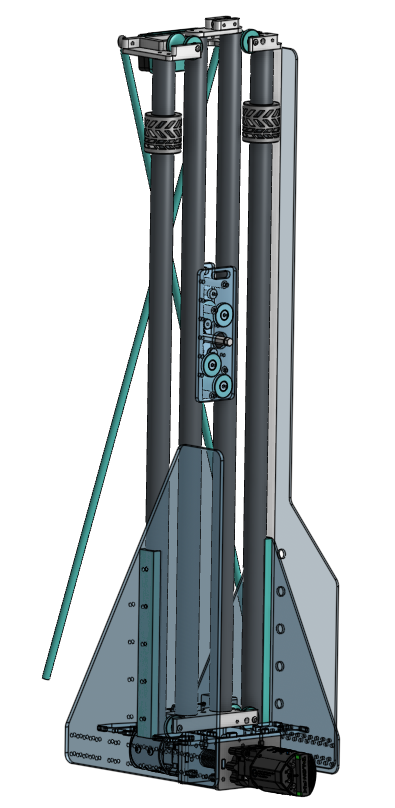
Built for the 2025 FIRST Robotics Competition season, this carbon fiber tube elevator raises a scoring mechanism to six programmed height setpoints and reaches full height in under one second.
Elevator assembly · CAD design
The challenge
Raise a game piece, a 4-inch PVC pipe, more than 72 inches off the floor to score, as quickly as possible. Traditional FRC elevators commonly use 2 × 1-inch aluminum tubing with machined inserts. After one of our machines broke over the summer, we no longer had the manufacturing capability for that approach.
The approach
Using a weighted design matrix, we chose leftover carbon fiber tubing as the best option for a quick, low-cost elevator. We used PLA for as many components as possible, reinforcing parts as needed through prototyping. We had a fully working prototype in about two weeks. The elevator measured 40 inches tall when stowed and 70.25 inches at full height. The first iteration weighed 4.6 pounds without motors or payload.
My contribution
I handled the ideation, concept development, prototyping, design, and assembly, and manufactured approximately 50% of the parts.
The outcome
The elevator went from stowed to full height in under one second, as shown in the video below, and could move to six programmed height setpoints along its travel. We built a lightweight working prototype within our manufacturing constraints and ahead of our expected timeline.
Engineering decisions
Problems & solutions.
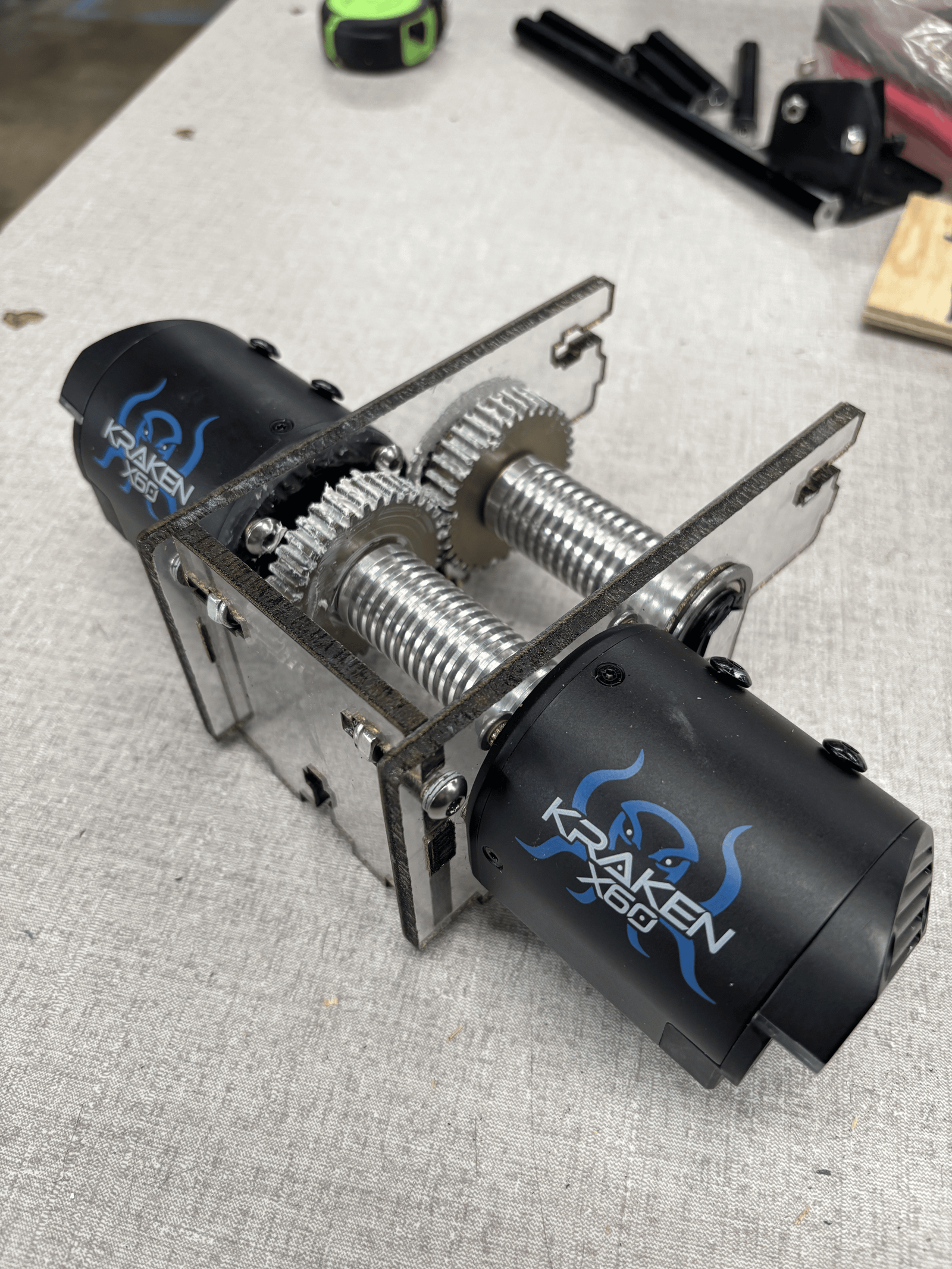
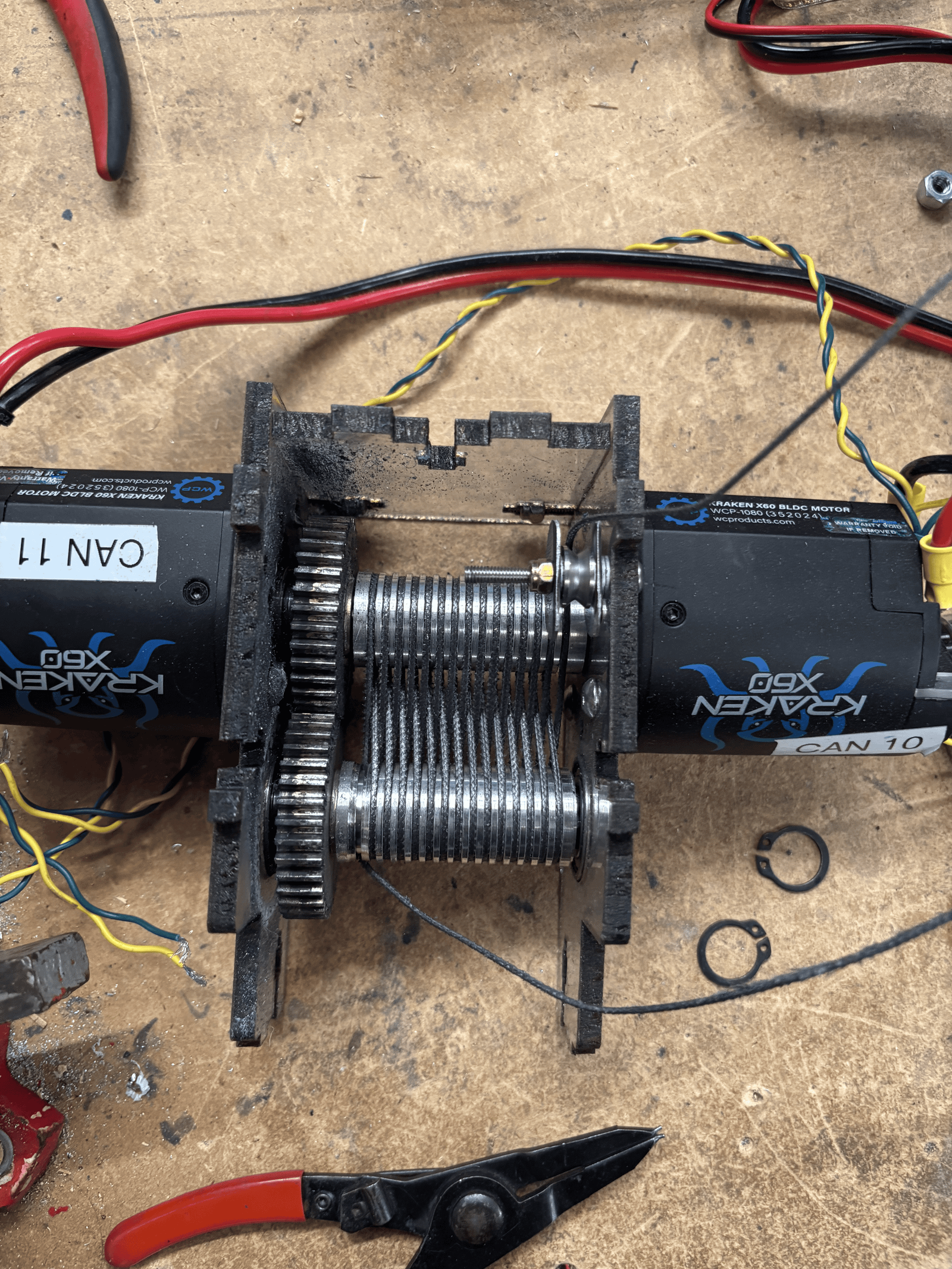
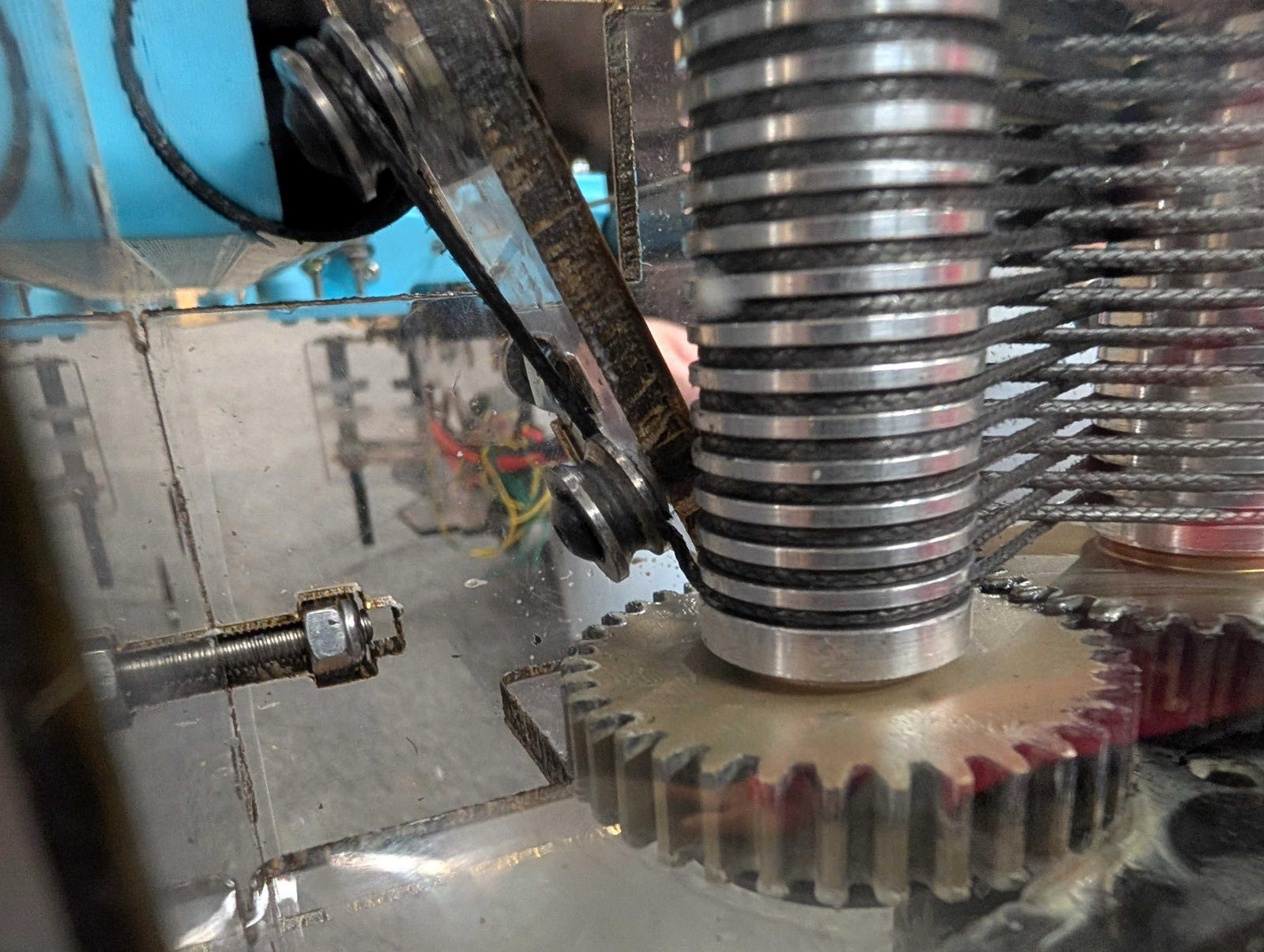
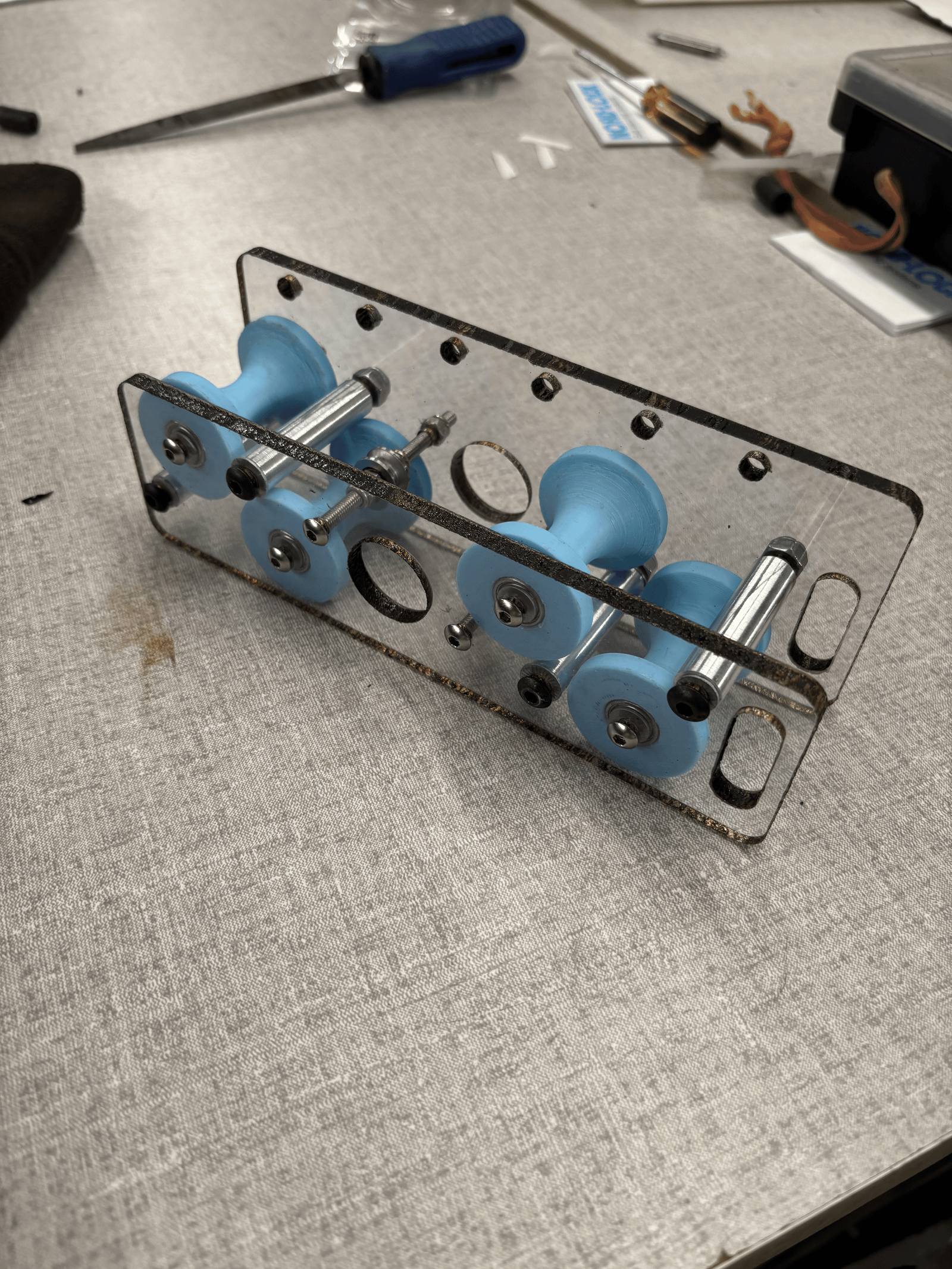
Capstan assembly before riggingCapstan assembly with riggingRigging failure: off the track
1 / 3
Capstan drive & rigging
Problem
Hit precise height setpoints in very short time windows. Slack in a conventional spool system can introduce backlash, while cable buildup changes the effective drum radius, affecting lifting force and positioning.
Solution
A capstan rigging system maintains a consistent effective drum diameter, helping keep the relationship between motor rotation and elevator travel predictable for software automation. Keeping the rigging tensioned reduces slack and backlash. The tensioner is included in the carriage, shown below.
Result
Controlled elevator positioning across six programmed height setpoints, with full-height travel in under one second. See the video below.
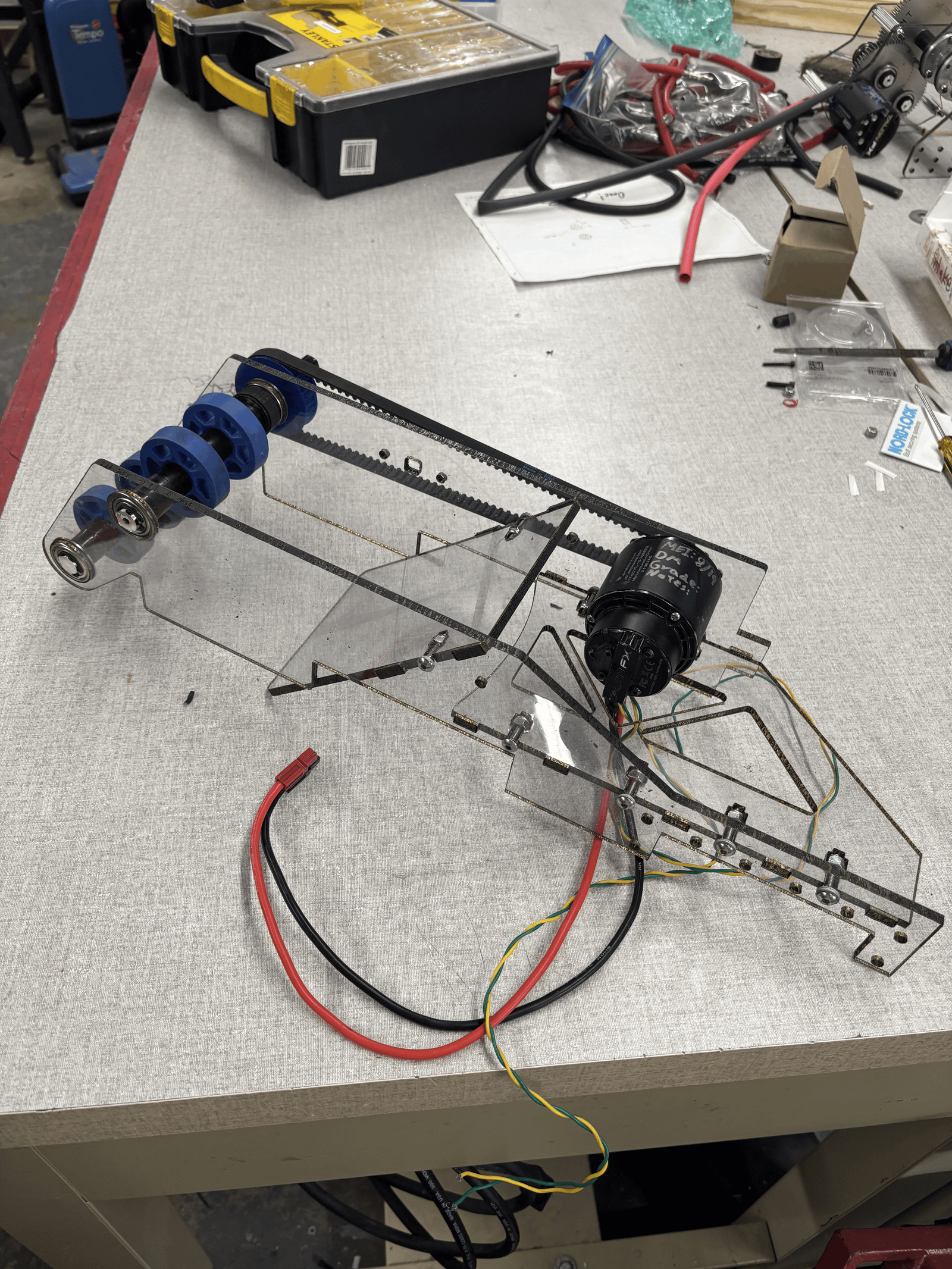
Roller carriage assembly
Roller carriage
Problem
Guide the scoring mechanism, anchor both ends of the wire, and provide a way to hold and increase tension while the elevator is fully rigged.
Solution
I reused the concave rollers (the blue pieces) found elsewhere on the elevator. They hug the round tubing, with bearings set into them to reduce friction. V-groove bearings guide the wire to a central shaft, not pictured, where the two ends wind in opposite directions. Turning the shaft tensions both ends, allowing us to work the slack through the capstan.
Result
Using a 3/8-inch ratchet attached to the shaft gave us a simple way to tighten the rigging and remove the slack. The carriage slid smoothly along the tubing, while the spacers and rollers kept it rigid.
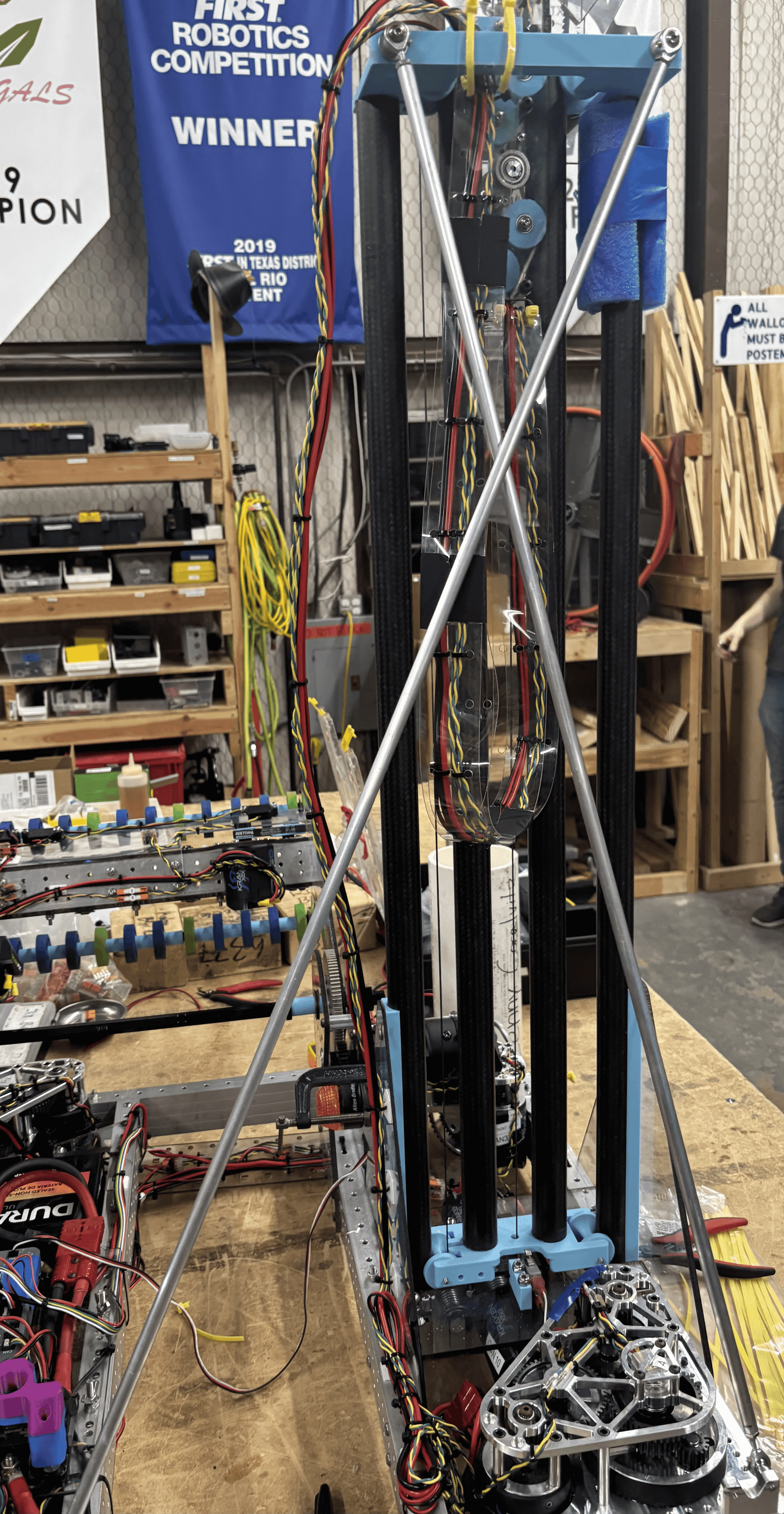
Assembled vertical supports
Vertical supports
Problem
The elevator shook during ascent because its base was small relative to its height. The robot’s layout constrained the footprint, so we needed external support to reduce shaking and prevent damage.
Solution
I added two aluminum braces connected with bearing eye bolts, tying the elevator’s spine to two corners of the robot. These connections created a wider, three-dimensional support structure that distributed loads into the robot frame without increasing the elevator’s footprint.
Result
The braces added lightweight, rigid support and reduced shaking during ascent to a level we could no longer notice. The elevator could move quickly without the visible sway seen before the supports were added.
Beyond the elevator
Getting the extra reach.
Starting-configuration constraints limited the elevator’s height. Reaching above the 72-inch goal with the elevator alone would have required another full stage, adding weight, complexity, and taking up more space.
I designed the scoring mechanism to extend above the carriage, providing the extra reach without adding another elevator stage. This kept the elevator simpler while allowing the mechanism to reach the scoring height.
I designed the scoring mechanism for easy attachment and removal, making it easier to test and refine across six iterations.